08/04/2026
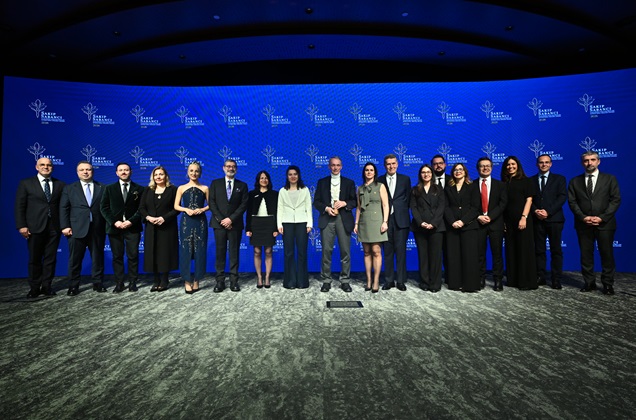
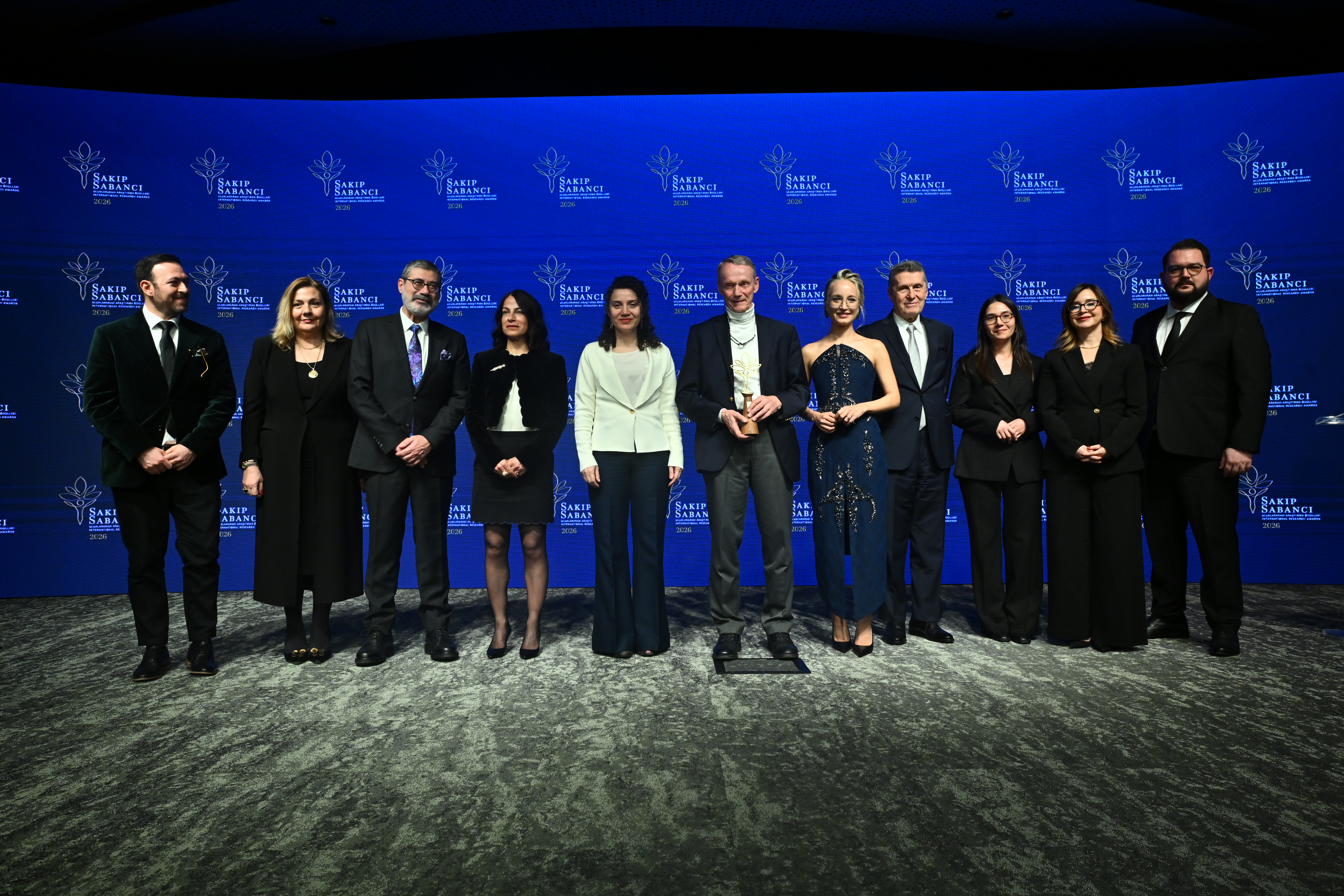
The Sakıp Sabancı International Research Awards and Commemoration Ceremony was held on April 7, 2026, at the Sabancı Center. At the ceremony, the late Sakıp Sabancı, Honorary Chair of Sabancı University, was commemorated on the 22nd anniversary of his passing. The winners of the Article Award for the 2026 awards program, themed "Rethinking Cross-Border Governance," were also announced at the ceremony. Within the scope of the program, the Special Jury Prize was given to political scientist Prof. Dr. Peter J. Katzenstein, Walter S. Carpenter Jr. Professor of International Studies at Cornell University.
Sabancı University Honorary Chair Sakıp Sabancı was commemorated with a ceremony on the 22nd anniversary of his passing. At the ceremony held at the Sabancı Center, the winners of the 2026 Article Award, established in accordance with Sakıp Sabancı's will, were also announced. The Sakıp Sabancı International Research Awards and Commemoration Ceremony was attended by Sabancı University Board of Trustees Chair Hayri Çulhacı, Sabancı University Board of Trustees Member Melisa Sabancı Tapan, and numerous other guests.
“Sakıp Sabancı’s legacy is a responsibility that guides us towards the future”
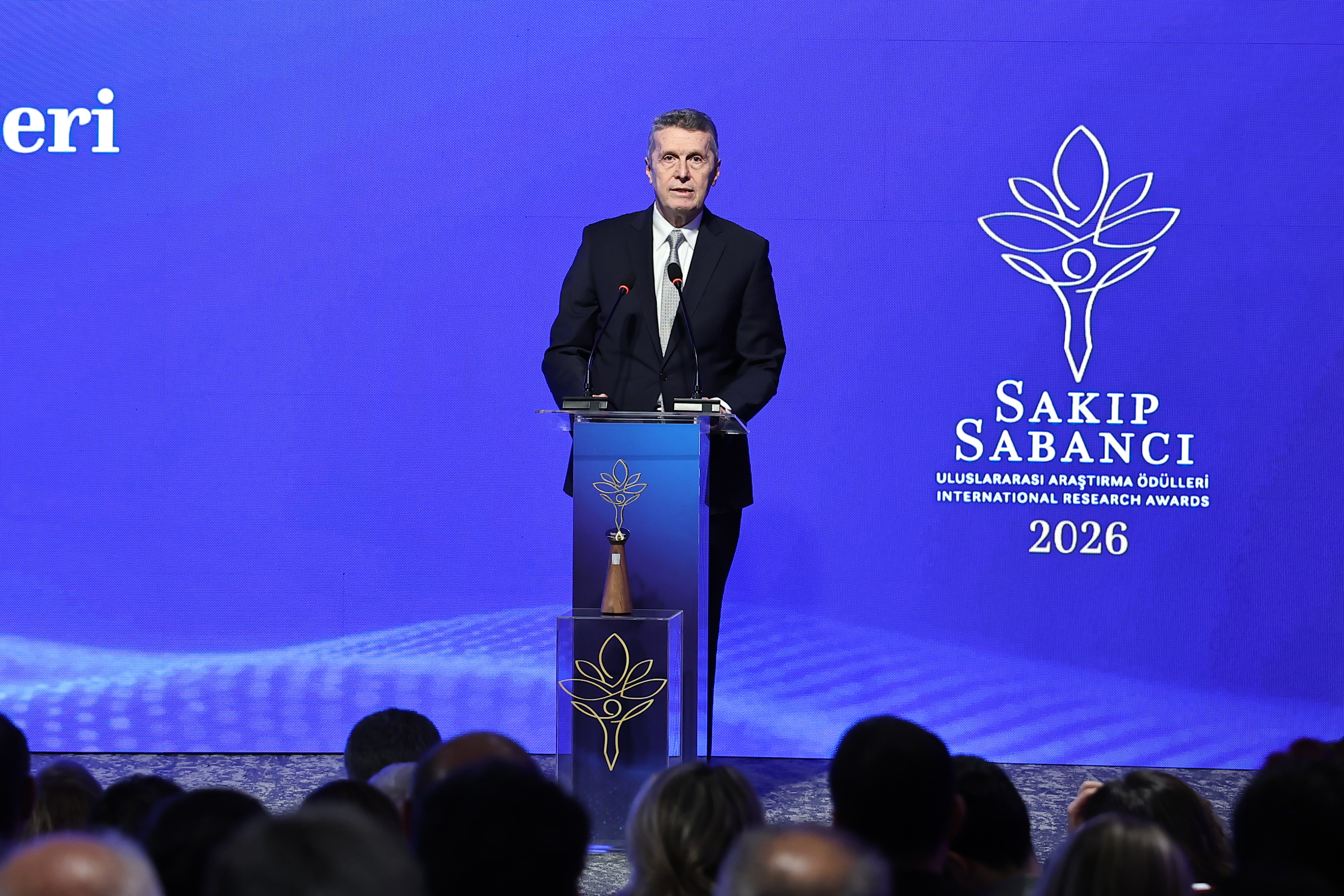
Sabancı University Board of Trustees Chair Hayri Çulhacı said in his speech at the ceremony: “We are gathered here today to commemorate Sakıp Sabancı, our Honorary Chair and the founder of our university, who made a great contribution to the Sabancı Group's success with his vision and values, on the 22nd anniversary of his passing; and also to announce the Sakıp Sabancı International Research Awards, established in accordance with his will. Sakıp Sabancı was a very successful businessperson. He was passionate and enthusiastic at all times. And his passions often transcended his work. His two greatest passions were the Sakıp Sabancı Museum and Sabancı University. He successfully realized both during his lifetime. I wish he could have seen the point our university has reached today. I believe his pride would have multiplied. Sakıp Sabancı's legacy is a responsibility that guides us towards the future. Our duty is to carry this legacy forward, in line with the requirements of the age.”
“Sabancı University is an institution that produces knowledge and develops ideas for our country and the world.”
Noting that 26 years have passed since the establishment of Sabancı University, Hayri Çulhacı said, “Today, we have thousands of graduates, thousands of scientific publications, and strong academy-industry collaborations. Our university has achieved a respected position both in our country and internationally. Sabancı University is an institution that produces knowledge and develops ideas for our country and the world. The Sakıp Sabancı International Research Awards are an important part of this understanding.”
“The impact of investment in science transforms not only the present but also generations.”
In his speech, Hayri Çulhacı emphasized that in the transformation process where uncertainties are increasing, borders are being redefined, and global balances are being re-established, there is a greater need than ever for scientific thinking, free research, and interdisciplinary perspectives. Çulhacı continued: “At Sabancı University, we are committed to contributing to the future by protecting critical thinking and a free academic environment, guided by science. In times of uncertainty, our greatest strength is our commitment to reason and science. And we know that investment in science is the most profitable investment, because its impact transforms not only the present but also future generations.”
The 2027 Theme: “Regulating Intelligence: Democracy, Markets, and Global Order in the Digital Age”
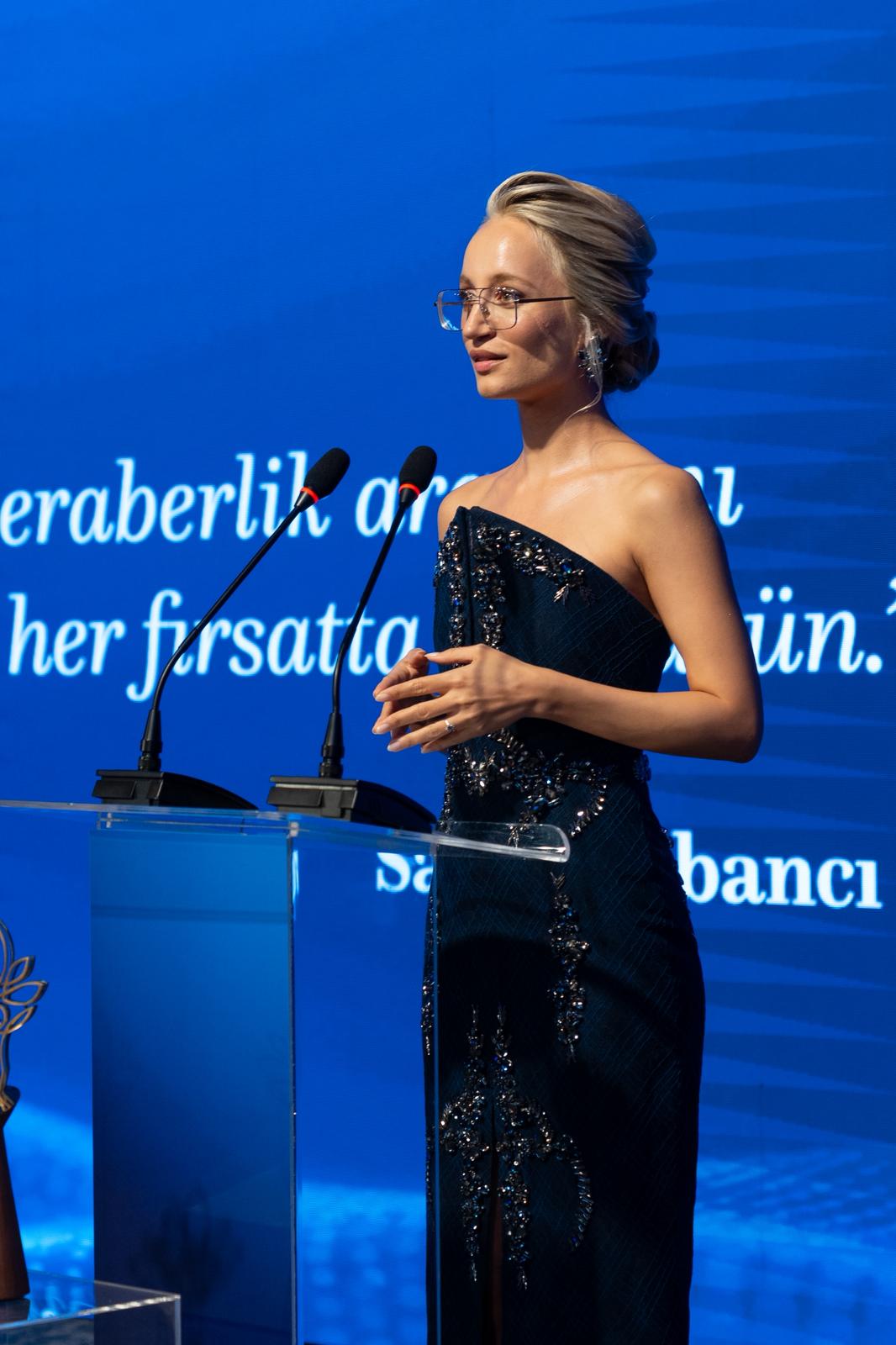
Sabancı University Board of Trustees Member Melisa Sabancı Tapan stated: “We are all interconnected. There is a transnational, trust-based agreement between us. Sakıp Sabancı’s understanding of unity and togetherness was also nourished by this idea. The awards we are giving in his name today represent the continuation of this bond and shared responsibility.” Melisa Sabancı Tapan noted that the transformation, ranging from artificial intelligence to data architecture, is also central to democracy, labor, and the global order, adding, “If we cannot direct this power with fairness, we risk creating new inequalities instead of strengthening our bonds. With this sense of responsibility and the strength we derive from Sakıp Sabancı’s vision that understands both the present and the future, we have chosen “Regulating Intelligence: Democracy, Markets, and Global Order in the Digital Age” as our 2027 award theme.”
“We must manage technology in a way that serves our common future.”
Drawing attention to the fact that it is no longer enough to simply use technology today, Melisa Sabancı Tapan said, “We must manage it in a way that serves human dignity and our common future. This shows that we need the guidance of science more than ever. Today, we are adding another layer to the question we have been asking since our existence: To remain human. Sakıp Sabancı used to say, ‘Continue the search for unity and togetherness in every endeavor and at every opportunity.’ Our being together here today is the most concrete indication that this search is still ongoing.”
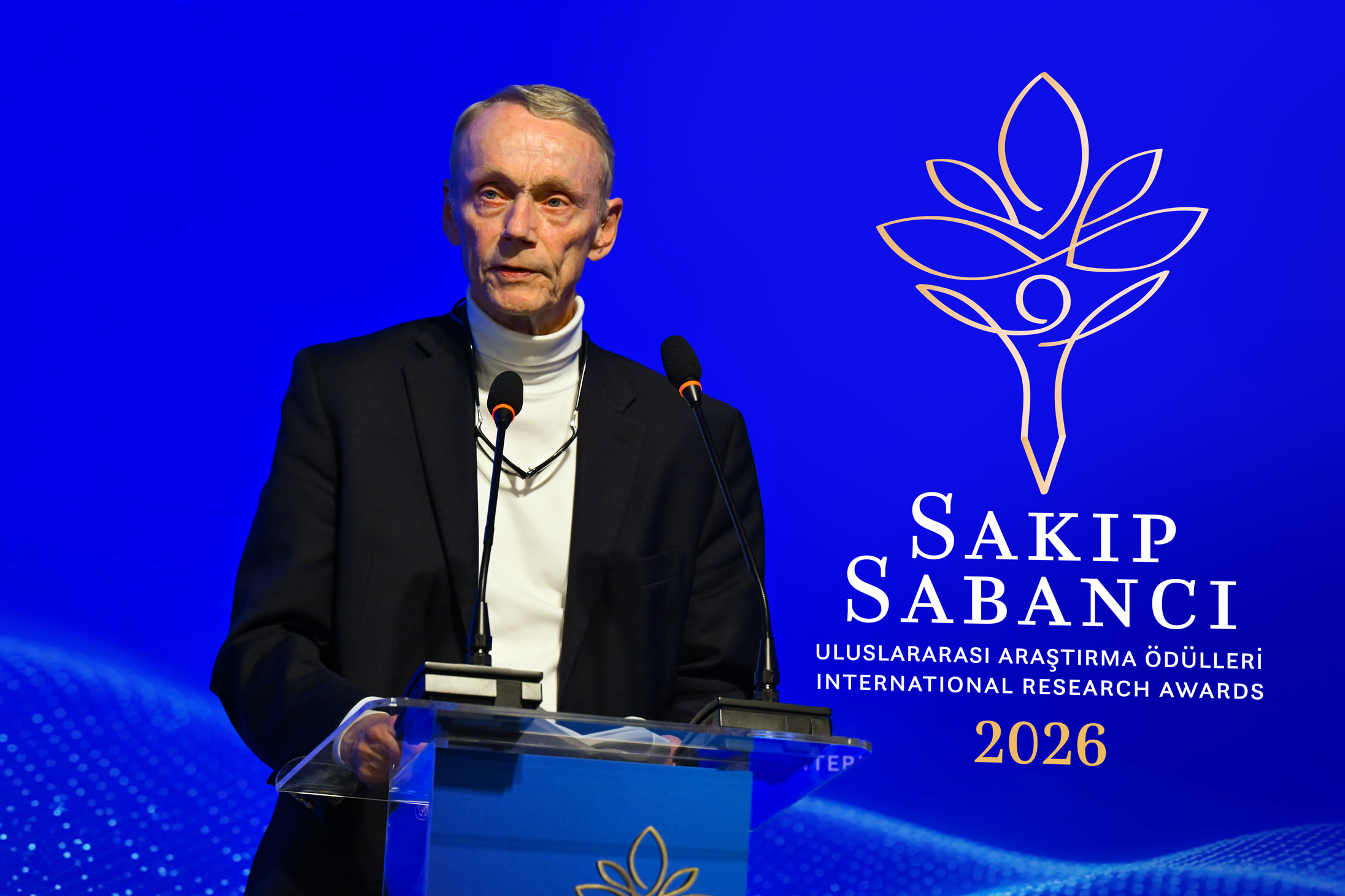
The Special Jury Prize was bestowed upon political scientist Prof. Dr. Peter J. Katzenstein.
Political scientist Prof. Dr. Peter J. Katzenstein was awarded the Special Jury Prize within the scope of the 2026 Sakıp Sabancı International Research Awards. Prof. Dr. Peter J. Katzenstein, a political scientist and Walter S. Carpenter Jr. Professor of International Studies at Cornell University, was awarded the Special Jury Prize. Peter J. Katzenstein stated, “I am extremely grateful to the Sabancı Foundation and Sabancı University for their invitation and the honor that it entails. I learned that the original meaning of Sabancı means working the land. Hacı Ömer Sabancı worked as a laborer picking cotton on a plantation before becoming a broker, trader, and manufacturer of textiles in the 1930s. Subsequently, he created one of the largest business conglomerates in Türkiye. He surely did not expect that, a century later, his family would have risen to such heights that it could establish a famous foundation and a first-rate university. Both are testimony to a deep commitment to critical inquiry, learning, and democracy -- values always and everywhere open to serious challenge.
“The social sciences, including the science of world politics, sideline uncertainty.”
Focusing on the concept of “surprise” in his speech, Prof. Dr. Katzenstein continued: “Our ignorance is unavoidable, remediable, and full of surprises. Surprise is a feature of a world filled with chance events. The social sciences, including the science of world politics, sideline uncertainty. It looks to me like we are all afraid of uncertainty because we are afraid of losing control. Instead, we believe fervently that everything can be calculated. How, then, should we deal with surprise? Not with big leaps and final solutions that have caused so much harm and suffering in world history. Albert Camus wrote: “he who dedicates himself to . . . history dedicates himself to nothing, and, in turn, is nothing. But he who dedicates himself to the duration of his life, to the house he builds, to the dignity of mankind, dedicates himself to the earth . . . and sustains the world again and again.” Le Mythe de Sisyphe describes our arduous task as we cope with surprise. Sisyphus was condemned to push a heavy boulder up the hill, again and again, and to watch as it rolled down the hill, again and again. Camus ends his story – surprisingly -- with hope, not despair: we must imagine Sisyphus to be happy.”
Within the scope of the Sakıp Sabancı International Research Awards, the 2026 Article Award was given to Associate Professor Barış Çaylı Messina from the Faculty of Social and Political Sciences at Lincoln University for his work titled “Planetary Dissent: Global Movements, Protective Criminalization and the Exhaustion of Sovereignty” and to Dr. Esra Demir, a faculty member in the Department of Information and Technology Law, Private Law Division, Faculty of Law, Ankara University, for her work titled “The European Approach to AI Regulation: A Possible Way to Achieve Technological Innovation Without Compromising Fundamental Values”.
The Research Awards are held annually with themes relevant to current events.
The Sakıp Sabancı International Research Awards have been held annually without interruption since 2006 with themes relevant to current events. The award program for 2026 highlighted that in our world, redefined by cross-border problems such as the climate crisis, digital information regimes, pandemics, and the sharing of space resources, these problems are still mostly addressed with fragmented and inadequate responses centered on nation-states. Within the scope of the program, research focusing on “Regulating Intelligence: Democracy, Markets and Global Order in the Digital Age” will be evaluated in 2027. The rapid proliferation of digital technologies, spanning a wide range including artificial intelligence, big data, platform infrastructures, and digital networks, is transforming governance at national and global levels. This raises questions about democratic accountability, inequality, labor, security, and the future of global governance. The 2027 Sakıp Sabancı International Research Awards invite ideas from various fields of social sciences that address the effects of digital transformation on democratic governance, market structures, and the evolving international system, as well as its political, economic, and social consequences.